
And there were in the same country shepherds abiding in the field, keeping watch over their flock by night. And, lo, the angel of the Lord came upon them, and the glory of the Lord shone round about them: and they were sore afraid. And the angel said unto them, Fear not: for, behold, I bring you good tidings of great joy, which shall be to all people. For unto you is born this day in the city of David a Saviour, which is Christ the Lord. (Luke 2:8-11)
Think of the joy of a new-born baby. The parents can’t wait to show their new baby to the world. Typically, we announce the good news to our closest friends and immediate family first. Then, we pass the word around the church. Next, phone calls and text messages spread the message. These days, a Facebook announcement is sure to follow, with plenty of pictures. Parents want their family and friends to know they have a new child.
So, we may find it curious that when God announced the birth of His Son, He didn’t tell it first to the chief priests or Pharisees. We suspect that the religious authorities in Israel may have expected to be first in line for the newsflash. After all, wouldn’t God want them to know? Were they not the foremost authorities in all things related to the Messiah? Herod acknowledged their expertise. The magi put Jerusalem in an uproar with their question, “Where is he that is born King of the Jews?” Herod knew who to ask. He sent for the doctors of the law.
These doctors must have expected the Messiah would be one of them. At least, He should recognize their deep devotion, holding them up as an example and honoring them before the people (see John 5:40-44). Maybe that explains why they didn’t bother to travel the five miles to Bethlehem to see the baby Jesus for themselves, though they could tell the wise men where to find Him.
God didn’t announce the birth of Jesus to the religious authorities. Nor did He announce His birth to the royalty of that day. Caesar Augustus didn’t get a message, as far as we know. King Herod got the word second-hand through the visiting magi. The wise men didn’t get the memo either but learned the news from a star. Surely, the king deserved to hear the word directly from God, not second-hand from foreign wise men.
But God didn’t announce the birth of Jesus to the rich, the powerful, the important, or the wise. He didn’t announce it to the nation of Israel, or the city of Jerusalem, or the people of Bethlehem. Big cities like Jerusalem may feel a sense of self-importance, but God did not feed that conceit.
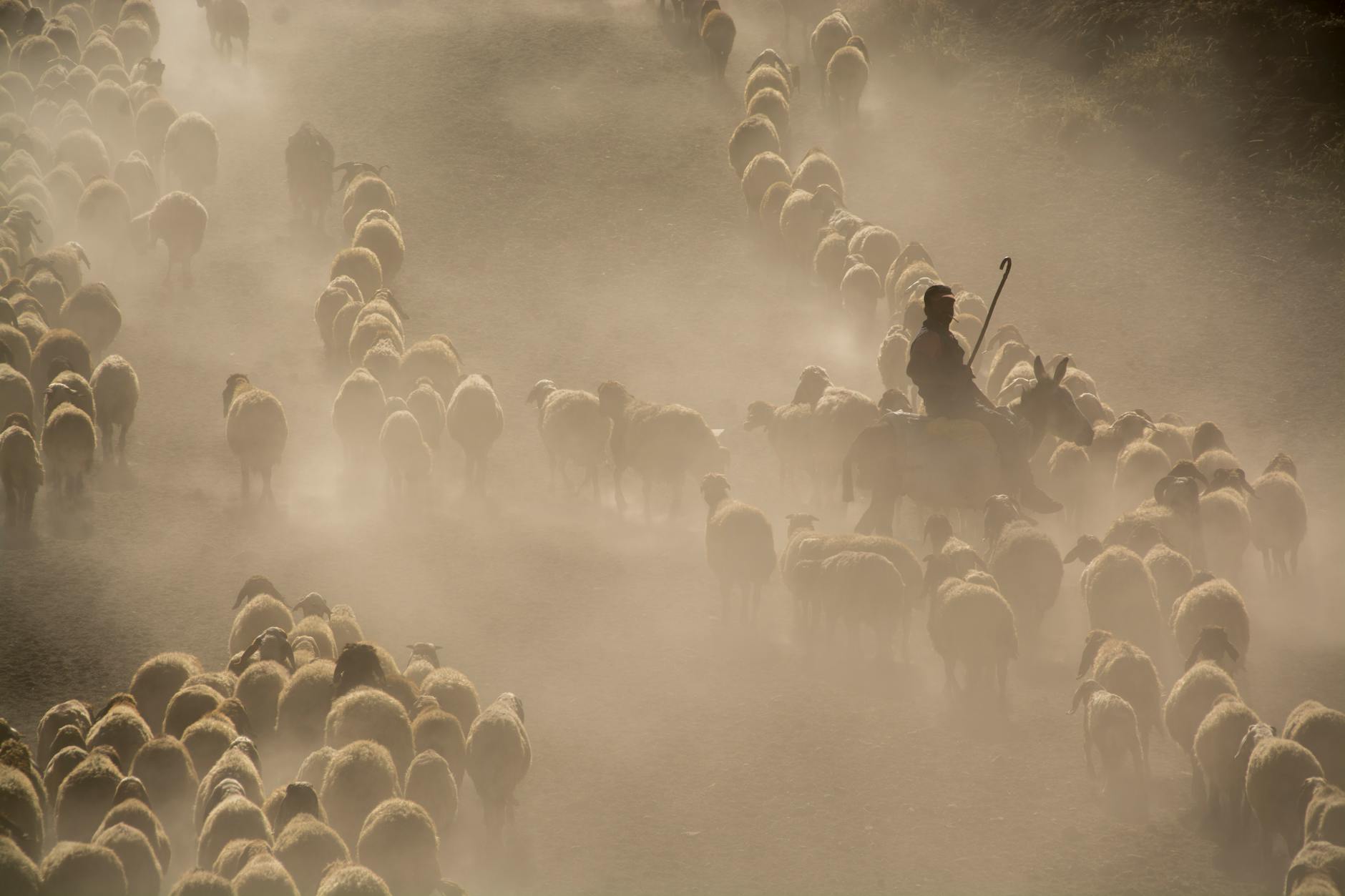
The angels announced the birth of Jesus to shepherds. Does that strike us as odd? We can’t say why God wanted the shepherds to know. Alfred Edersheim believed that this particular crew of shepherds cared for the temple flock, the sheep destined for sacrifice at the temple.[i] He suggested that God wanted these shepherds to know that the final lamb, the Lamb of God that takes away the sins of the world, was just now born. That could be.
But the Bible doesn’t explain God’s choice of shepherds for the announcement. We know that every patriarch of Israel had been a shepherd. Abel was a shepherd. Abraham was a shepherd. Jacob was a shepherd. Moses was a shepherd. David was the most famous shepherd of all. Yet, by the time Jesus was born, much of the shine had worn off that particular occupation. People didn’t think very highly of a shepherd. They belonged on the lower rungs of the social ladder. We could compare them to a modern-day construction crew, hard-working, hard-living, swearing, fighting, and hardly fit for high society. So the angels probably didn’t interrupt the shepherd’s devotion time when they announced the good news that Jesus was born.
And there were in the same country shepherds abiding in the field, keeping watch over their flock by night. (Luke 2:8)
The shepherds were doing what shepherds do, in other words. God gave the good news to working men doing their job.
Can we take away a little something from this? Society might frown on you. The “elites” might despise your particular occupation and make superficial judgments about you. But God honored hard-working men, maybe a little rough around the edges, with the most significant piece of breaking news the world has ever received. God honored shepherds in their calling.
Let that encourage you to go about your work, serving the Lord in whatever you do. Remember the way God chooses the foolish things of the world to confound the wise, the weak things to confound the mighty, the base things, the despised, the things that are not, to bring to nought things that are: “That no flesh should glory in his presence” (I Corinthians 1:27-29).
And this, too, is the triumph of the skies.
*****
Taken from Join the Triumph of the Skies: 31 Reasons to Celebrate Christmas, available on Amazon for a measley $11 (please leave a 4-star rating and review, of course)!
[i] (Edersheim 1896), pp. 186–187
 The Village Smithy