
Matthew doesn’t focus on Herod, the chief priests and scribes, Mary and Joseph, or the wise men in his gospel. Matthew tells us what God did. According to Matthew 2, God prepared a star to guide foreign dignitaries to Jerusalem, where the star disappeared. Because they had no star to guide them, the wise men jolted Jerusalem with their question: “Where is the Born King[1] of the Jews?” To a usurper king like Herod, that question was a threat.
Having gotten their answer, the Bible tells us that the same star they had seen in the east “went before them, till it came and stood over where the young child was.” We see God’s hand in this – guiding the wise men with the star, bringing them to Jerusalem, hiding the star, provoking their question. God used the wise men to herald the news of Christ’s birth so that Herod the King, the chief priests and scribes, and “all Jerusalem” would hear the news of the birth of Christ.
Then, God gave them the star to guide them once again. I’m surprised, frankly, at the natural explanations that have been offered for this star. Even the more conservative commentators tend to overlook its supernatural nature.

Many have suggested that it was formed by an alignment of two planets (Jupiter and Saturn). Astrologers tell us that these planets aligned in 7 BC and “would have suggested to Babylonian astrologers the idea of a king in ‘the Westland,’ as they called Palestine.”[2] Others have suggested a supernova; apparently, there is evidence for a prominent one between 5 and 4 BC. My favorite suggestion is that the star was Halley’s Comet, rumored to have appeared in 12 BC. All I can say to that is, you’d need some speedy camels to keep up with that.
An obvious question in response to these suggestions would be, can anyone tell which star stands over your city of residence? Is there a star that stands over Utah but not Indiana? From my house in Utah, I have seen the Big Dipper and the Little Dipper overhead. I also observed these same constellations overhead while visiting family in Pennsylvania. Sailors use the stars to chart their course, yet I doubt it would be possible to discern which state or nation a star might stand over.
When the star reappeared, some insist that it was there symbolically, but it wasn’t much help.
Matthew does not say that the rising star the Magi had seen … led them to Jerusalem. They went first to the capital city because they thought it the natural place for the king of the Jews to be born. But now the star reappeared ahead of them (v. 9) as they made their way to Bethlehem …. Taking this as confirming their purposes, the Magi were overjoyed (v. 10). The Greek text does not imply that the star pointed out the house where Jesus was; it may simply have hovered over Bethlehem as the Magi approached it. They would then have found the exact house through discreet inquiry… (Expositor’s Bible Commentary, emphasis mine)
I find it unbelievable that a star would hover over Bethlehem unless it entered our atmosphere. In the mountains around my hometown of Ogden, I notice how vivid the stars can be at higher elevations. But I cannot tell which star stands over Ogden. How can a star hover over anything if it is outside of our atmosphere? For that matter, we can’t say that the moon – the satellite nearest our atmosphere – hovers over a particular state or county, let alone my hometown. It could be over Wyoming or Nevada; I wouldn’t know the difference.
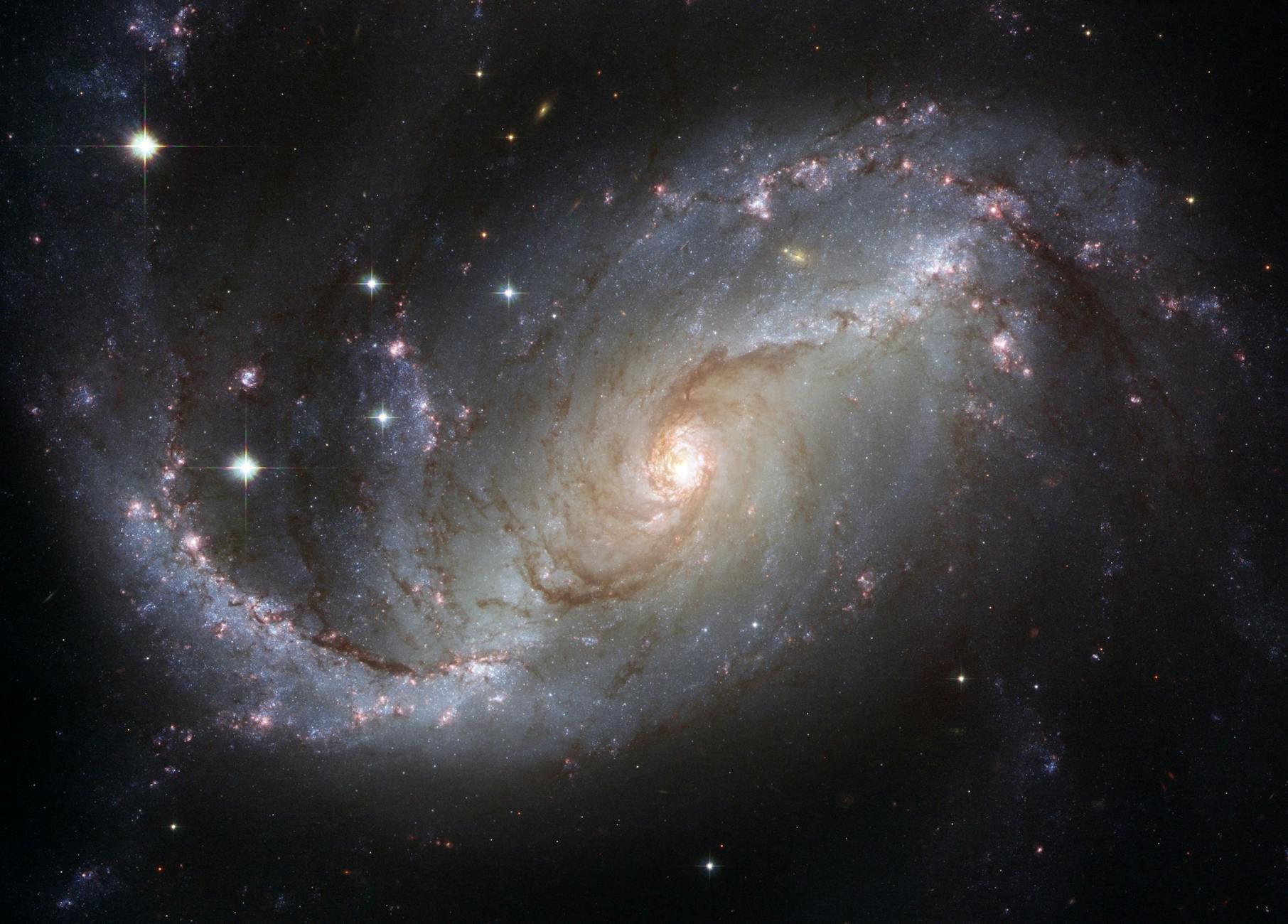
May God deliver us from this kind of neutral approach to the text of Scripture. Matthew 2:9 says, “And, lo, the star, which they saw in the east, went before them, till it came and stood over where the young child was.” And the 11th verse tells us that the young child was in a house: “And when they were come into the house…” The Greek uses the imperfect tense (“went before them”) to describe the star’s continual going before them until, arriving (participle), it stood over where the young child kept being (imperfect). Clearly, the star guided the wise men, which could only happen if a star entered our atmosphere.
Do I think this was a material star? Most stars are more massive than our moon. Earth’s moon would be large enough to cover the entire state of Alaska if it entered our atmosphere. We can probably rule out the shell of a star. To be sure, God may have created a special star for this event.
Scientists tell us that a star is a giant ball of burning gas, mostly helium and hydrogen. At least, that is the material substance of a star. But what holds a star together or holds a star in place? I doubt science can tell us what maintains the fire throughout the centuries. In other words, we know what makes a star, but we don’t know what a star really is.
And yet, somehow, a star entered our atmosphere and guided the wise men. Douglas Wilson has pointed out that this leaves us with a choice of miracles: either a miracle of science guided the wise men, or a miracle of God guided them? Do we believe the wise men were supernaturally skilled with their pocket abacas and the Pythagorean Theorem so they could calculate to the very house, the place in Bethlehem where Jesus was? That would be a miracle of science.
Faith says God directed them with a star, specially provided for this event. This star guided them to the house where Jesus was. The wise men didn’t need to do a discreet canvas of any Bethlehem neighborhood. But that would mean the star of Bethlehem was something unnatural, expressly provided by God for the wise men, something supernatural.
The Bible Knowledge Commentary suggests that the star of Bethlehem was the Shekinah glory of God.
Could it be that “the star” which the Magi saw and which led them to a specific house was the Shekinah glory of God? That same glory had led the children of Israel through the wilderness for 40 years as a pillar of fire and cloud. Perhaps this was what they saw in the East, and for want of a better term they called it a “star.”[3]
I like this suggestion. When God made the stars, He made them out of nothing but His own words. We could argue that a star is a visible word of God, a placeholder for God’s glory, a fixed station where His glory burns bright in the heavens. God speaks the stars, and the heavens declare His glory in return. So, it isn’t a stretch to say that every star’s essence is God’s glory. It wouldn’t be a stretch to say that the wise men saw the Shekinah glory of God guiding them first to Jerusalem, then to the house in Bethlehem where Jesus was.
But of course, the point is not to understand what the star was. The point is to understand what God did with the star. God guided Gentile kings to the King of Kings so that the kings of this earth would fall down and worship Him, open their treasures, and give Him kingly gifts.
[1] ο τεχθεις βασιλευς – aor pass part, literally “the one that is born king.”
[2] Richard T. France, “Matthew,” in New Bible Commentary: 21st Century Edition, ed. D. A. Carson et al., 4th ed. (Leicester, England; Downers Grove, IL: Inter-Varsity Press, 1994), 909.
[3] Louis A. Barbieri Jr., “Matthew,” in The Bible Knowledge Commentary: An Exposition of the Scriptures, ed. J. F. Walvoord and R. B. Zuck, vol. 2 (Wheaton, IL: Victor Books, 1985), 22.
 The Village Smithy