
Re-printed (with editorial comments) from the article published June 22, 2007 at https://jackhammer.wordpress.com/2007/06/22/not-all-kjvo%e2%80%99s-are-created-equal/
Regarding the issue of preservation, on a basic level there are those who believe that God has perfectly preserved His Word, and there are those who believe that God has not.
Those who believe that God has not perfectly preserved His Word typically will say something like this: The Bible is inerrant in the originals, however… the however indicating that copyists and translators and the human element has corrupted the perfection of the originals.
We can divide those who deny perfect preservation into two different camps. On one side are those who deny the inerrancy of Scripture altogether (we call them modernists). Opposed to the modernists, though not entirely separate from them are those who believe that God preserves His Word in a sort of Theistic Evolutionist way, through man discovering new copies and gaining new understanding of Greek, finding new light through scholarship. Modern Versions have come from these Critical Text promoters.
Opposite these MVOs (Modern/Multiple Versions Only), we have those who believe in Perfect Preservation (commonly referred to as KJVOs). The KJVOs can also be divided into two camps. On the one hand, we have those who believe that God has perfectly preserved His Word in the English Language, which we can call English Preservationists. On the other side, we have those who believe that God has perfectly preserved His Word in the Original Languages. We can call them Original Language Preservationists. Both sides will hold to the King James, and both sides agree that God has perfectly preserved His Word. But the two sides differ on a number of important issues.
I wish I would have understood that division before writing the infamous Plea for an update. Having spent a significant amount of time debating for the side of the King James Version, I was a bit taken back by the personal attacks launched against me over that one article. Honestly, I was blindsided by it. I have always known, in the back of my mind, that it wasn’t enough to be King James Only, that one could not simply hold the position, but that he must also say it right. One’s membership card will not be adequate. KJVOs must have two forms of identity and pass the shibboleth. Even as a KJVO, I’ve often felt that a discussion of the issue was like a walk on eggshells. So, I wasn’t surprised that I slipped up. After all, I’ve never been one for tiptoeing.
What surprised me was not the fact that I said the wrong thing. That never surprises me. What surprised me was the massive efforts from busybody pastors (some my friends, some not so friendly) who set the phone lines ablaze all across the country rallying the troops against me. What disappointed me was the efforts of some to stir up strife within my church. What disgusted me was the move of some to cut me off without so much as a trial, let alone any effort to set me straight. I heard about many phone calls that were made about me, but had only one phone call made to me. The pastors who did this should be ashamed. The conduct was frankly ungodly, and I cannot be silent about it. Short of naming names (y’all know who you are) I/ll simply say that I will be more wary of friendship in the future.
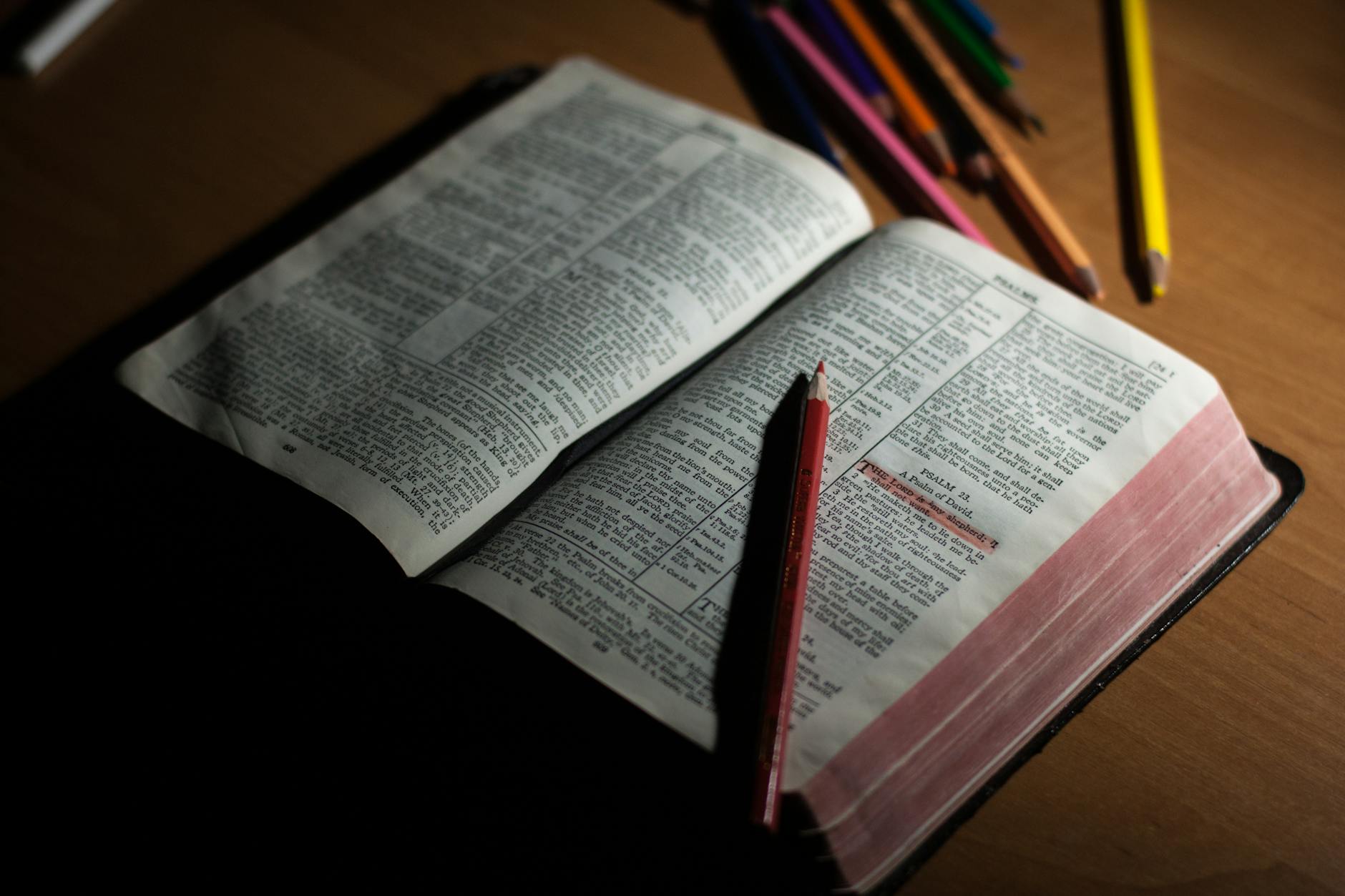
But that aside, it forced me to give more attention to the differences between the English Language Preservationists and the Original Language Preservationists. I am not an English Language Preservationist. I should be clear about that first. But from my little seat in the bleachers, I am noticing that the English Language Preservationists have done much to damage our cause and to hijack our position. As you read, notice the influence that English Preservationists have had on the King James Only position, and then consider this my attempt to isolate their position and refute it.
English Preservationists
I would not purposely misrepresent the position of anyone, and since I consider those who are English Preservationist to be on our side, I especially do not want to misrepresent theirs. Of course there are a variety of differences even amongst those who are of this persuasion, so I’ll try to recognize that and not spend too much time on the extreme views that are not necessarily shared by all.
I’ve attempted here to identify the basic tenets of this position, boiling down to the essential elements. Forgive me where I have left too much skin hanging on the bones.
1. Basically, the English Preservationist believes that God wrote the King James Bible, in much the same sense that God wrote the Bible. God used men to do the work, but God wrote them both.
2. The English Preservationist believes that the Bible has always been preserved in one form or another throughout New Testament history. However, they also believe that when the King James Bible was written, it was written to preserve Scripture, and that from 1611 on (or for some, from 1769 on), the English version became the standard, and that it is now the place where God is preserving His Word. This is key to understanding the English language position.
3. I don’t know of any English Preservationist who would claim INSPIRATION for the King James Bible (including Ruckman, from what I’m told). Most English Language Preservationists will deny secondary[1] inspiration though they believe that the English version is inspired. However, every English Preservationist would say that inerrancy applies to the Version itself.
4. Amongst the English Preservationists, there is some disagreement as to whether any other language could also have their own perfect translation. Some believe that the English translation is the preserved word for all languages. Others believe it to be the preserved word for English, while Spanish or Chinese could have their own preserved word.
5. Some (not a few) English Preservationists believe that with the writing of the King James Version, preservation was perfected. This point also is essential to understanding the English-only position.
Original Language Preservationists (OLPs)
- The OLPs believe that God preserved jots and tittles (Mt 5:18), and that not one has passed. Thus, God has perfectly preserved His Word.
- Therefore, the OLPs believe that the Word of God is perfectly preserved in the Textus Receptus for the NT, and in the Masoretic Hebrew for the OT.
- The OLPs believe that God canonized words through the faithful copying of His people, and that through those words, we have the 66 books of the Bible, which are also canonized.
- Some will object that among the various copies of the TR, there are numbers of textual variants. And this is true. In fact, there is about 93% agreement amongst the existent copies of the TR. (Note: this statement is factually incorrect. See footnote below).[2]
- Those of the CT/eclectic position will argue that because there is about 7% disagreement[3] amongst the copies, therefore we should all study the texts scientifically to determine the best reading. Thus, they rely on forensics and science to render the correct reading.
- The Original Language Preservationists believe that this is an entirely faithless approach, and in addition, that this is disobedient to Scripture.
3. That brings up the third main fundamental of the OLP. The OLP believes that the church is the pillar and ground of the truth (I Tim 3:15), and thus that the local churches throughout NT history have received the Word of God as it is, and have accepted it.
- Put another way, the local churches (what we refer to as The Church) did not determine what the Word of God is, but rather they gave important testimony to what the Word of God is. They did not set out to scientifically prove, based on evidence, what the best word was. Rather, they received and accepted the words as kept by the churches.
- In other words, throughout New Testament history, the accepted readings were used. That is, up until the last 150 years or so.
- Again, this was accomplished through the faithful copying of believers throughout the ages.
- The copies that have survived and have seen widespread usage are the copies that we accept to be the preserved Word of God.
4. For the Original Language Preservationists, this is where the King James Version enters the scene, and explains why we are King James Only.
When the KJV was written, the English-speaking world had two English Bibles available: the Geneva Bible and the Bishop’s Bible. The English-speaking world was deeply divided between these two Bibles, and the KJV effectively settled the dispute.[4] As evidence, the Geneva and the Bishops Bible are museum pieces today.[5] You normally won’t order one from a Christian bookstore or catalogue. But the King James Version is the most widely distributed Bible in the History of the World. Truly, the churches settled on this Bible. It is the Church Bible.
In 1894,[6] Scrivener assembled the Textus Receptus used by the King James Version translators into one distinct edition. So, we have the Bible which English-speaking churches have held to for almost 400 years, and we have the underlying Greek and Hebrew editions. We can be sure then that we have the perfectly and Providentially preserved Word of God in the Masoretic Hebrew for the Old Testament, and in Scrivener’s TR for the New Testament.
Reconciling the two positions
Now, when we put the two positions (English Preservation/Original Language Preservation) side-by-side on the ole table, we see clearly that there is a difference between the two. Both accept by faith that God has perfectly preserved His Word. On that we can agree. Both agree that the King James Bible was Providentially given to the churches. We can agree on that as well.
Since I believe firmly in the Sovereignty and Providence of God, I also can loosely agree with the English-only assertion that God wrote the King James Bible. I can agree in this sense and only in this sense: I believe that God was involved in the writing, and that God was guiding these men to choose this word and not that one.
However, I do not believe that God was involved in the writing of the KJV in the same sense that God was involved in the writing of, say, the book of Romans, or of the Psalms, or of Ruth. Did God write the King James Bible? The King James is not inspired in the same sense as Hebrews and James are inspired. The English words are not God-breathed. If I were to make a comparison, I would have to say that God wrote the KJV in the same sense that God wrote the U.S. Constitution. The Providence of God was clearly involved in both, and we see his hand in each. But the U.S. Constitution is not God-breathed, nor does it have the same life in it as the inspired words of Scripture.[7]
I want to be careful here, because I know that this will offend some. I’ll do my best to be void of offense, if the reader will give his best effort to understand what I am arguing here. The words that God-breathed were Greek and Hebrew words. There was no need for God to re-breath those words in English. Nor do I believe that the English words were divinely inspired. Otherwise, God would have given the words in English to begin with.
Along with that, I disagree with the notion that when the King James Bible was written, preservation moved from Greek / Hebrew to English. God promised to preserve jots and tittles (Mt 5:18), not commas and semi-colons (or, perhaps more accurately, not dotted i’s and crossed t’s). Nor is there one verse in all of Scripture that ever indicates that God would preserve the Bible in any language other than the language in which God gave the Bible.
In addition, I disagree with the notion that any further editions of the 1611 would be “changing the Bible” or “re-writing the Bible.” Preservation did not begin in 1611, nor did it reach its final destination that year. Since the closing of the canon, God has been providentially preserving His Word, and God’s Word is preserved. Translations neither add to nor detract from the perfection of Providence.
If God has preserved His Word, then God’s Word is preserved. Translations cannot change that. The issue of Modern Translations is not that it undermines the preservation of God’s Word. It cannot do that. It might undermine our understanding of preservation, but it cannot undo what God has done. Preservation is preservation, and translations are just that. Translations.
I was truly amazed at some of the accusations that were hurled around a few months ago.[8] I have never said that I wanted to “re-write the Bible.” I have never said that I wanted to “change the Bible.” I was not saying that before, and I am not saying that now. I have never called for a new version. I don’t think we should try to get a new version.
When Wycliffe wrote his translation in 1380, he was neither “re-writing” nor “changing” the Bible. He was writing a translation. When Tyndale wrote his in 1525/1530, he was not “re-writing” the Bible. He was not “changing” the Bible. He was writing a translation. In 1611, when the King James Bible was written, these men were not “changing” or “re-writing” the Bible. And when the next edition of the King James Bible was written, the Bible was not changed. To say that I ever argued for “re-writing” or “changing” is a gross slander, and those who perpetrated this lie should be rebuked before all.
[1] Perhaps “double” inspiration would be a better word here.
[2] In the original publishing of this article, I misspoke on this point. I was helpfully corrected by Thomas Ross, who graciously commented, “I believe that the 93% agreement among the editions of the TR was a slip of the pen; I believe Pastor Mallinak meant that the 93% was the figure for the agreement between the CT and the TR. The differences between editions of the TR is much, much, much smaller; probably c.99.5% or more. The differences between the Scrivener TR and the 1598 Beza is listed in the back of the edition made by Bible for Today (the leatherbound one, anyway). They are very minimal. In those instances, we should go with the text accepted by the churches, namely, th eone behind the KJV, the Scrivener TR.”
[3] Again, this is incorrect.
[4] This description is simplistic at best. First, the Geneva was hands down the Bible of choice in that day. The crown rejected the Geneva Bible because some of the notes were considered hostile to the crown. Thus, the king required the Bishop’s Bible to be read in worship services. But it has been noted that even among the Anglican Bishops, the Geneva Bible enjoyed widespread use. The crown rejected the Geneva Bible.
[5] While this is true, it should be noted that the Geneva Bible continued to be the most popular version of the Bible for 50 years after the KJV was published, until it became difficult to purchase.
[6] Scrivener published his TR edition in 1881. It was re-published after his death in 1894
[7] By no means would I argue that the King James Version is comparable to the Constitution or Declaration of Independence.
[8] In response to my plea for an update, linked above. Please note that I have significant disagreements with what I wrote then, especially with the tone of the original article. I have (and will) continue to attempt to correct some of those things. But it is part of this very lengthy conversation that has spanned nearly two decades now, so I will not delete it.

 The Village Smithy