Is the King James Version Inspired?

I am republishing an article (with links, comments, and edits for spelling) I originally published November 27, 2009 on the old Jackhammer blog. You can view the original article, along with the 116 comments that followed, at https://jackhammer.wordpress.com/2009/11/27/is-the-king-james-version-inspired/

Your argument is sound… nothing but sound.  —Benjamin Franklin

I, being of sound mind and body, am about to touch the third rail.  I do so reluctantly, yet resolvedly.  But before I do, I should like to say a very fond farewell to both of my readers (Hi mom!  Hi dad!) and it has been nice knowing you all.  Not that political suicide is the best way to go or anything.  I certainly wouldn’t recommend it to anyone.  But from time to time, it becomes necessary for one to sacrifice oneself for the sake of an important issue.  So, here I go.  I’m stretching forth my hand even as I type, reaching for that superconductor of electricity that is sure to send a shockwave through the ole’ system and land me flat on my back, perhaps pushing up daisies.  Just remember, I did it for the Gipper…

All Spark and No Fire

So, here go I.  Much of the controversy swirling around the King James issue centers on the question of whether or not the King James Version is inspired.  The English Preservationists have made this the particular sticking point on this issue, and of course, we who also consider ourselves KJVO’s are loath to challenge them on the question.  At least, if we value our place in the KJVO orbit, we better leave this one alone.

Which is exactly why I find myself anxious to address it.  First, there is just something about a third rail that is especially electrifying.  And secondly, I don’t believe that this particular third rail has enough juice to toast a piece of Wonder Bread.  It is all spark and no fire, or something like that.  I certainly don’t believe that this issue will be my undoing.  But then again, I’ve never stepped on a landmine before either.

The real issue here is in the definition of terms.  English Preservationists throw the term “inspiration” around as if it means nothing at all.  Then, they stretch the term around like Gumby, trying to make it sound rational to (a) deny double inspiration, and in the same breath to (b) claim inspiration for our English Version.  One might wish for a grain of honesty, just the size of a mustard seed, so that one could ascertain exactly what it is that they are arguing for, since they believe that the English version of the Bible is inspired, and deny that this means “double-inspiration.”

Since God inspired Hebrew words in the Old Testament and Greek words in the New Testament, and since, as far as we know, English words weren’t around at the time that holy men of old spake as they were moved by the Holy Ghost, we are faced with a dilemma.  If we deny double-inspiration, then we can’t argue that our English version is inspired.  If we argue that the English version is inspired, then we must necessarily believe in double-inspiration.

Either that, or else we will need to admit that we have elasticized the word “inspired,” turning “inspiration” into a clay humanoid figure.  Logicians call it “equivocation.”  When we use the same term in two different senses, all within the same argument, we are guilty of equivocation.  Equivocation is very popular in humor.  But equivocation is always misleading when we change the meaning of our terms mid-argument, without offering any sort of explanation for the suddenness of our switch.

Depends on What the Meaning of “Is” Is

When a man says that the King James Version is inspired, we understand that to mean that the English words proceeded directly out of the mouth of God.  That would be the plain meaning of the statement.  That is, if we are applying the commonly understood, 2 Timothy 3:16 meaning of “inspired” (theopneustos).  If that same man then turns around and denies “double inspiration,” well then, either he is lying, or he is equivocating the meaning of his terms.

Humorous arguments rely on equivocation in order to make their point, and we generally understand that.  For instance, a student was arguing that there is no such thing as black or brown feathers.  In order to make his point, he argued that since a feather is light, and what is light cannot be dark, therefore a feather cannot be dark.  You might recognize the equivocation in that argument.  It is humorous, so long as he isn’t serious.

Worse examples can be found.  My wife really hated the man who argued that women are irrational because the only rational being is man, and women are not men.  She had an almost irrational desire to bash his brains out of his head.  Fortunately, I was there to point out his equivocation.  Necessity once required us to bring a man before the church because he argued that Ray Charles is God.  He claimed that God is love, and love is blind.  Since Ray Charles is blind, he concluded that Ray Charles must be God.  In his case, he should have understood what the meaning of “is” is.

The Non-Inspired Argument

Unfortunately, not all equivocations are equally apparent.  On the question of whether or not the King James Version is inspired, the definition-shift befuddles and be-muses at times.  This is never more the case than when a man takes it in hand to explain how it is that he believes our English version is inspired.  One favorite trick that he will use is to argue that if the King James Version is not inspired, then we have an “uninspired” or “non-inspired” Bible.  Take this statement from Shelton Smith of The Sword of the Lord as an example.[1]  Under the head “If not inspired, then what is it?” he makes this statement:

As I hold the King James Bible in my hands, if it is not the inspired Word of God, then what on earth is it?

Are you telling me that it is somehow the Word of God but yet not inspired?  Are you saying it is the uninspired Bible?

Ironically, the next section is entitled, “An Inspired KJB is not Double Inspiration.”  And Dr. Smith goes on to say,

None of the men that I know who believe in a preserved, inspired text believe in “double inspiration.”  We do not believe that the KJB translators were gifted (theopneustos) with God’s inspiration!

What we very strongly believe is that the Lord God Almighty promised to “preserve” His inspired Word.  He did use those translators to preserve the text for us so that we have an authentic English Bible.

To automatically equate our insistence on a preserved inspired text as double inspiration reflects neither reality nor the truth.

I repeat – we do not now, nor have we ever, advocated or believed in double inspiration!

As a side note, we should point out that neither does Peter Ruckman.[2]

Nevertheless, we do struggle to answer this charge. If we say that the King James Bible is not inspired, then are we saying that we have an uninspired Bible?

The charge really is not so difficult to answer.  Instead, the reader should note the shift in the terms of the argument mid-stream, because what we have here is a sort of extended equivocation—yet  another misleading use of ambiguity employed by Shelton Smith and those who make this same argument.  We are discussing whether or not a translation of the Bible is inspired.  If I say that the translation was not inspired in the same sense that the original Greek and Hebrew words were inspired, am I saying that my King James Bible is the uninspired Bible?  Absolutely not.

You see, whether intentional or not, this kind of argumentation is dishonest.  Those who make it are glossing over what they mean, and they are doing this by shifting terms back and forth.  First, we are discussing a translation, then, without any warning whatsoever, we shift the argument to Scripture.  The Scriptures are inspired.  The King James Version is a faithful translation of Scripture.  So, we can say that the King James Version is the inspired Word of God.  It is not, however, contradictory on our part to say that the Authorized Version is not inspired.  You ask how that can be so?  Very simply.  When I said that “the King James Version is the inspired Word of God” a moment ago, I was referring to the KJV as Scripture.  And we know that all Scripture is given by inspiration of God.  When I said that “the Authorized Version is not inspired” immediately afterward, I was referring to the KJV as a translation.  The translation was not inspired. That would require double inspiration.  But the Scriptures are still inspired.  And since the Scriptures are not lost in translation, the King James Version is the Very Word of God.

When a preacher insists that the King James Version is inspired, and insists in the next breath that he is not arguing for double inspiration, he is equivocating.  He should explain what he means when he says that “the King James Version is inspired.”  Is he referring to the KJV as an English translation of Scripture, or is he referring to it as Scripture?  When he calls the KJV inspired, what does he mean by “inspired?”  Does he mean that God breathed it out in the same sense that God breathed out the Greek and Hebrew words?  Does he mean that God divinely superintended the translators as they translated?  Is he referring to the fact that translated Scripture is still Scripture?  There is a significant difference between each of these meanings of inspiration.

The point is that he needs to do a better job of defining his terms.  All arguments aside, it really is misleading to argue that the KJV is inspired, and then to turn around and say that you don’t believe in double inspiration, without any kind of explanation in between those statements.  If a man believes in inspiration for any translation, if he believes that the translation itself is inspired, then he believes that God rewrote the Bible, re-gave the words, this time as English or Spanish or Russian or Latin words.  If he doesn’t believe that, then he needs to find a better way to say what it is that he means.

Given by Inspiration

We have discussed this before in our comments section,[3] but we thought it appropriate once again to attempt a more complete treatment of the question.  In 2 Timothy 3:16, the Bible says, “All Scripture is given by inspiration of God.”  In English, this phrase is 8 words long.  It is the translation of 3 Greek words—and I apologize to the Greek purists who hate transliteration here, but those three Greek words are, “Pasa graphe theopneustos.”  Literally, all Scripture is God-breathed.  Theopneustos is an adjective in the predicate position, hence the word “is.”

We have had some amount of debate in the past as to whether theopneustos refers to the product or the process.  In other words, does theopneustos refer to the process of giving the words, or to the words as the product of the process?  If we would understand the issue concerning the KJV and inspiration, we must understand the answer to this question regarding theopneustos.

Theopneustos is Product

An adjective in the predicate position makes an assertion about the noun.  All Scripture is theopneustos — God-breathed.  We understand the word “is” to refer to a state of being or existence.  We describe the nature of the existence of Scripture as “God-breathed.”  All Scripture exists as God-breathed Scripture, and that quality is never lost in any of those words.  In the past, we have argued that we know which words were the God-breathed words, because we still have them.  We have all of them.  Non-inspired words were lost, or lost for long periods of time before they resurfaced, thus proving that they were not God-breathed words.  The breath of God produced words, and those words formed Scripture.  All the writings of Scripture are God-breathed.

Theopneustos is Process

Our English Bible translates theopneustos as a verb — given by inspiration.  In fact, the phrase “by inspiration” modifies the verb “given.”  It explains how it was given, the instrument by which all Scripture was given.  If the product of theopneustos is God-breathed words, then the process must necessarily have been by God breathing out those words.  Our English Bible is correct then in its translation.  All Scripture is given by inspiration of God.  Inspiration was a process, and the result of inspiration was the product of the totality of inspired Scripture.

Inspiration as a process occurred over a fixed period of time.  We believe that God closed the canon, that God finished that process in time past.  The product continues, per the promise of God, forever.  But the process was completed almost 2,000 years ago.  God did not restart or redo that process somewhere around 1611.  But God did enable English-speaking men to give a faithful translation of His Words in English.  The product continues.  We have the ability to examine that product continually, and a great assistance in examining that product, through our English Bible.

But our English Version is not inspired.  To say that it is would be to say that God redid the process.  Our English Bible is the inspired Word of God.  But that is different than saying that the English Version is inspired.  Our English Bible is the inspired Word of God because it faithfully translates God’s Word (the product) into English.  The product is not lost in translation, nor is the process redone.

Much of the argument on this issue has revolved around the “breath of God” and whether or not it can be lost in translation.  I would agree with those who insist that the words retain that quality of being the “breath of God.”  But I would also point out the words that retain the quality of being the “breath of God” are not the English words.  The words that God originally gave, those are the inspired words.  We must understand our English translation in that context, or else we are undoing ourselves in this debate.


[1] Unfortunately, I did not properly cite the article I am quoting from the Sword of the Lord and cannot track it down now. However, Smith’s comments here are consistent with what he has said in other places. See this more recent article for example: https://faithalone.org/blog/kjv-is-inspired-says-dr-sheldon-smith-in-sword-of-the-lord/

[2] In fairness to Dr. Smith, he has also taken heat from those who believe the King James is inspired. This article, for instance, chastises Smith for arguing that “the Greek text allows us to fully discover the beauty of the Bible. In other words, he was saying that the King James Bible is INFERIOR to its underlying texts.”

[3] For the curious, you might be interested in the extended discussions we had on this issue under the category “King James Only” at https://jackhammer.wordpress.com/category/king-james-only/ are undoing ourselves in this debate.

Not All KJVOs are Created Equal

Re-printed (with editorial comments) from the article published June 22, 2007 at https://jackhammer.wordpress.com/2007/06/22/not-all-kjvo%e2%80%99s-are-created-equal/

Regarding the issue of preservation, on a basic level there are those who believe that God has perfectly preserved His Word, and there are those who believe that God has not.

Those who believe that God has not perfectly preserved His Word typically will say something like this: The Bible is inerrant in the originals, however… the however indicating that copyists and translators and the human element has corrupted the perfection of the originals.

We can divide those who deny perfect preservation into two different camps. On one side are those who deny the inerrancy of Scripture altogether (we call them modernists). Opposed to the modernists, though not entirely separate from them are those who believe that God preserves His Word in a sort of Theistic Evolutionist way, through man discovering new copies and gaining new understanding of Greek, finding new light through scholarship. Modern Versions have come from these Critical Text promoters.

Opposite these MVOs (Modern/Multiple Versions Only), we have those who believe in Perfect Preservation (commonly referred to as KJVOs). The KJVOs can also be divided into two camps. On the one hand, we have those who believe that God has perfectly preserved His Word in the English Language, which we can call English Preservationists. On the other side, we have those who believe that God has perfectly preserved His Word in the Original Languages. We can call them Original Language Preservationists. Both sides will hold to the King James, and both sides agree that God has perfectly preserved His Word. But the two sides differ on a number of important issues.

I wish I would have understood that division before writing the infamous Plea for an update. Having spent a significant amount of time debating for the side of the King James Version, I was a bit taken back by the personal attacks launched against me over that one article. Honestly, I was blindsided by it. I have always known, in the back of my mind, that it wasn’t enough to be King James Only, that one could not simply hold the position, but that he must also say it right. One’s membership card will not be adequate. KJVOs must have two forms of identity and pass the shibboleth. Even as a KJVO, I’ve often felt that a discussion of the issue was like a walk on eggshells. So, I wasn’t surprised that I slipped up. After all, I’ve never been one for tiptoeing.

What surprised me was not the fact that I said the wrong thing. That never surprises me. What surprised me was the massive efforts from busybody pastors (some my friends, some not so friendly) who set the phone lines ablaze all across the country rallying the troops against me. What disappointed me was the efforts of some to stir up strife within my church. What disgusted me was the move of some to cut me off without so much as a trial, let alone any effort to set me straight. I heard about many phone calls that were made about me, but had only one phone call made to me. The pastors who did this should be ashamed. The conduct was frankly ungodly, and I cannot be silent about it. Short of naming names (y’all know who you are) I/ll simply say that I will be more wary of friendship in the future.

Photo by John-Mark Smith on Pexels.com

But that aside, it forced me to give more attention to the differences between the English Language Preservationists and the Original Language Preservationists. I am not an English Language Preservationist. I should be clear about that first. But from my little seat in the bleachers, I am noticing that the English Language Preservationists have done much to damage our cause and to hijack our position. As you read, notice the influence that English Preservationists have had on the King James Only position, and then consider this my attempt to isolate their position and refute it.

English Preservationists

I would not purposely misrepresent the position of anyone, and since I consider those who are English Preservationist to be on our side, I especially do not want to misrepresent theirs. Of course there are a variety of differences even amongst those who are of this persuasion, so I’ll try to recognize that and not spend too much time on the extreme views that are not necessarily shared by all.

I’ve attempted here to identify the basic tenets of this position, boiling down to the essential elements. Forgive me where I have left too much skin hanging on the bones.

1. Basically, the English Preservationist believes that God wrote the King James Bible, in much the same sense that God wrote the Bible. God used men to do the work, but God wrote them both.

2. The English Preservationist believes that the Bible has always been preserved in one form or another throughout New Testament history. However, they also believe that when the King James Bible was written, it was written to preserve Scripture, and that from 1611 on (or for some, from 1769 on), the English version became the standard, and that it is now the place where God is preserving His Word. This is key to understanding the English language position.

3. I don’t know of any English Preservationist who would claim INSPIRATION for the King James Bible (including Ruckman, from what I’m told). Most English Language Preservationists will deny secondary[1] inspiration though they believe that the English version is inspired. However, every English Preservationist would say that inerrancy applies to the Version itself.

4. Amongst the English Preservationists, there is some disagreement as to whether any other language could also have their own perfect translation. Some believe that the English translation is the preserved word for all languages. Others believe it to be the preserved word for English, while Spanish or Chinese could have their own preserved word.

5. Some (not a few) English Preservationists believe that with the writing of the King James Version, preservation was perfected. This point also is essential to understanding the English-only position.

Original Language Preservationists (OLPs)

  1. The OLPs believe that God preserved jots and tittles (Mt 5:18), and that not one has passed. Thus, God has perfectly preserved His Word.
  2. Therefore, the OLPs believe that the Word of God is perfectly preserved in the Textus Receptus for the NT, and in the Masoretic Hebrew for the OT.
  • The OLPs believe that God canonized words through the faithful copying of His people, and that through those words, we have the 66 books of the Bible, which are also canonized.
  • Some will object that among the various copies of the TR, there are numbers of textual variants. And this is true. In fact, there is about 93% agreement amongst the existent copies of the TR. (Note: this statement is factually incorrect. See footnote below).[2]
  • Those of the CT/eclectic position will argue that because there is about 7% disagreement[3] amongst the copies, therefore we should all study the texts scientifically to determine the best reading. Thus, they rely on forensics and science to render the correct reading.
  • The Original Language Preservationists believe that this is an entirely faithless approach, and in addition, that this is disobedient to Scripture.

3. That brings up the third main fundamental of the OLP. The OLP believes that the church is the pillar and ground of the truth (I Tim 3:15), and thus that the local churches throughout NT history have received the Word of God as it is, and have accepted it.

  • Put another way, the local churches (what we refer to as The Church) did not determine what the Word of God is, but rather they gave important testimony to what the Word of God is. They did not set out to scientifically prove, based on evidence, what the best word was. Rather, they received and accepted the words as kept by the churches.
  • In other words, throughout New Testament history, the accepted readings were used. That is, up until the last 150 years or so.
  • Again, this was accomplished through the faithful copying of believers throughout the ages.
  • The copies that have survived and have seen widespread usage are the copies that we accept to be the preserved Word of God.

4.  For the Original Language Preservationists, this is where the King James Version enters the scene, and explains why we are King James Only.

When the KJV was written, the English-speaking world had two English Bibles available: the Geneva Bible and the Bishop’s Bible. The English-speaking world was deeply divided between these two Bibles, and the KJV effectively settled the dispute.[4] As evidence, the Geneva and the Bishops Bible are museum pieces today.[5] You normally won’t order one from a Christian bookstore or catalogue. But the King James Version is the most widely distributed Bible in the History of the World. Truly, the churches settled on this Bible. It is the Church Bible.

In 1894,[6] Scrivener assembled the Textus Receptus used by the King James Version translators into one distinct edition. So, we have the Bible which English-speaking churches have held to for almost 400 years, and we have the underlying Greek and Hebrew editions. We can be sure then that we have the perfectly and Providentially preserved Word of God in the Masoretic Hebrew for the Old Testament, and in Scrivener’s TR for the New Testament.

Reconciling the two positions

Now, when we put the two positions (English Preservation/Original Language Preservation) side-by-side on the ole table, we see clearly that there is a difference between the two. Both accept by faith that God has perfectly preserved His Word. On that we can agree. Both agree that the King James Bible was Providentially given to the churches. We can agree on that as well.

Since I believe firmly in the Sovereignty and Providence of God, I also can loosely agree with the English-only assertion that God wrote the King James Bible. I can agree in this sense and only in this sense: I believe that God was involved in the writing, and that God was guiding these men to choose this word and not that one.

However, I do not believe that God was involved in the writing of the KJV in the same sense that God was involved in the writing of, say, the book of Romans, or of the Psalms, or of Ruth. Did God write the King James Bible? The King James is not inspired in the same sense as Hebrews and James are inspired. The English words are not God-breathed. If I were to make a comparison, I would have to say that God wrote the KJV in the same sense that God wrote the U.S. Constitution. The Providence of God was clearly involved in both, and we see his hand in each. But the U.S. Constitution is not God-breathed, nor does it have the same life in it as the inspired words of Scripture.[7]

I want to be careful here, because I know that this will offend some. I’ll do my best to be void of offense, if the reader will give his best effort to understand what I am arguing here. The words that God-breathed were Greek and Hebrew words. There was no need for God to re-breath those words in English. Nor do I believe that the English words were divinely inspired. Otherwise, God would have given the words in English to begin with.

Along with that, I disagree with the notion that when the King James Bible was written, preservation moved from Greek / Hebrew to English. God promised to preserve jots and tittles (Mt 5:18), not commas and semi-colons (or, perhaps more accurately, not dotted i’s and crossed t’s). Nor is there one verse in all of Scripture that ever indicates that God would preserve the Bible in any language other than the language in which God gave the Bible.

In addition, I disagree with the notion that any further editions of the 1611 would be “changing the Bible” or “re-writing the Bible.” Preservation did not begin in 1611, nor did it reach its final destination that year. Since the closing of the canon, God has been providentially preserving His Word, and God’s Word is preserved. Translations neither add to nor detract from the perfection of Providence.

If God has preserved His Word, then God’s Word is preserved. Translations cannot change that. The issue of Modern Translations is not that it undermines the preservation of God’s Word. It cannot do that. It might undermine our understanding of preservation, but it cannot undo what God has done. Preservation is preservation, and translations are just that. Translations.

I was truly amazed at some of the accusations that were hurled around a few months ago.[8] I have never said that I wanted to “re-write the Bible.” I have never said that I wanted to “change the Bible.” I was not saying that before, and I am not saying that now. I have never called for a new version. I don’t think we should try to get a new version.

When Wycliffe wrote his translation in 1380, he was neither “re-writing” nor “changing” the Bible. He was writing a translation. When Tyndale wrote his in 1525/1530, he was not “re-writing” the Bible. He was not “changing” the Bible. He was writing a translation. In 1611, when the King James Bible was written, these men were not “changing” or “re-writing” the Bible. And when the next edition of the King James Bible was written, the Bible was not changed. To say that I ever argued for “re-writing” or “changing” is a gross slander, and those who perpetrated this lie should be rebuked before all.


[1] Perhaps “double” inspiration would be a better word here.

[2] In the original publishing of this article, I misspoke on this point. I was helpfully corrected by Thomas Ross, who graciously commented, “I believe that the 93% agreement among the editions of the TR was a slip of the pen; I believe Pastor Mallinak meant that the 93% was the figure for the agreement between the CT and the TR. The differences between editions of the TR is much, much, much smaller; probably c.99.5% or more. The differences between the Scrivener TR and the 1598 Beza is listed in the back of the edition made by Bible for Today (the leatherbound one, anyway). They are very minimal. In those instances, we should go with the text accepted by the churches, namely, th eone behind the KJV, the Scrivener TR.”

[3] Again, this is incorrect.

[4] This description is simplistic at best. First, the Geneva was hands down the Bible of choice in that day. The crown rejected the Geneva Bible because some of the notes were considered hostile to the crown. Thus, the king required the Bishop’s Bible to be read in worship services. But it has been noted that even among the Anglican Bishops, the Geneva Bible enjoyed widespread use. The crown rejected the Geneva Bible.

[5] While this is true, it should be noted that the Geneva Bible continued to be the most popular version of the Bible for 50 years after the KJV was published, until it became difficult to purchase.

[6] Scrivener published his TR edition in 1881. It was re-published after his death in 1894

[7] By no means would I argue that the King James Version is comparable to the Constitution or Declaration of Independence.

[8] In response to my plea for an update, linked above. Please note that I have significant disagreements with what I wrote then, especially with the tone of the original article. I have (and will) continue to attempt to correct some of those things. But it is part of this very lengthy conversation that has spanned nearly two decades now, so I will not delete it.

Joseph Smith, Hireling

Verily, verily, I say unto you, He that entereth not by the door into the sheepfold, but climbeth up some other way, the same is a thief and a robber. But he that entereth in by the door is the shepherd of the sheep. (John 10:1-2)

Jesus demonstrated His authority, not through unverifiable claims, but by mighty words and works. So, when Jesus healed a man born blind (John 9), the Pharisees knew they had a PR nightmare on their hands. They persistently refused to believe that Jesus was the Messiah (John 9:24, 29). That’s why, after the blind man was healed, the Pharisees did everything in their power to deny that he had been born blind at all or that Jesus had healed him. Rather than rejoice that the man was healed, they grilled him, insulted him, and excommunicated him.

Which is why John 10 opens with “verily, verily.” Jesus is all business. He means to point out the thieves and robbers. The Pharisees don’t care about the sheep; they only care about themselves (e.g., Luke 11:53). But Jesus cares for His sheep. Soon, the crowd will see Jesus dying and remember that the good shepherd gives his life for the sheep.

Continue reading “Joseph Smith, Hireling”

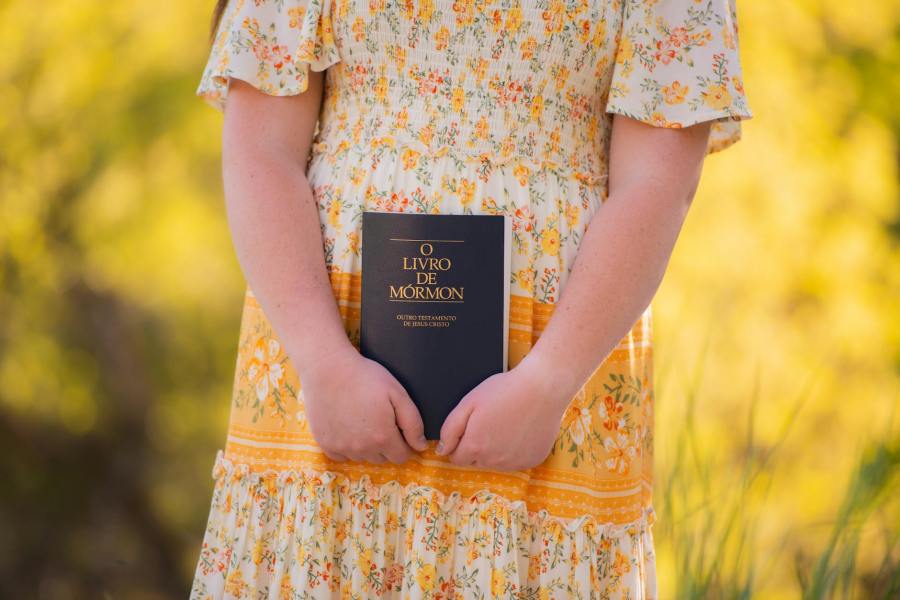
The Bible vs. the Book of Mormon: Another Challenge to my LDS Friends

The Book of Mormon is subtitled “Another Testament of Jesus Christ.” According to the Church of Jesus Christ of Latter-Day Saints website,

The Book of Mormon is a volume of holy scripture comparable to the Bible. It is a record of God’s dealings with ancient inhabitants of the Americas and contains the fulness of the everlasting gospel. [1]

Most members of the church read both the Bible and the Book of Mormon. Sunday School classes teach a three-year rotation with a year spent studying the Old Testament, the New Testament, and the Book of Mormon.* So, the three are familiar enough to you, and you probably see many similarities between them.

You probably won’t be surprised to hear that when I read the Book of Mormon, I don’t recognize the same voice, the same message, or any more than a superficial comparison between the Bible and the Book of Mormon. I understand that might offend you, but I hope you will at least consider my perspective. You might find it helpful, at least, to know why orthodox Christians like me cannot accept the Book of Mormon as Scripture.

I want to offer the following points of contrast: the Bible and the Book of Mormon don’t have comparable sources, don’t have a comparable theme, don’t have a comparable writing style, the prophetic voice is not comparable, the moral standing is not comparable, and the glory that shines from the Book of Mormon does not compare to the glory that shines forth from the Bible.

Continue reading “The Bible vs. the Book of Mormon: Another Challenge to my LDS Friends”

Subjective Truth vs Objective Truth: Some Thoughts for the LDS

One of the most attractive features of the LDS church is the encouragement members get to pursue revelations. In the early days of the church, this might have been its most popular custom. However, after a short time with this arrangement, Joseph Smith recognized its dangers.

In September 1830 Joseph and Emma Smith moved from Harmony, Pennsylvania, to Fayette, New York. When they arrived, they found that some Saints were being deceived by claims of false revelations: “To our great grief, … we soon found that Satan had been lying in wait to deceive, and seeking whom he might devour. [1]

In response, Smith received a revelation that placed a limit on the revelations that might be received by members of the church.

But, behold, verily, verily, I say unto thee, no one shall be appointed to receive commandments and revelations in this church excepting my servant Joseph Smith, Jun., for he receiveth them even as Moses. And thou shalt be obedient unto the things which I shall give unto him, even as Aaron, to declare faithfully the commandments and the revelations, with power and authority unto the church. [2] (D&C 8:2-3)

The church still encourages revelations. In fact, the church insists that if you haven’t received a revelation, you haven’t received the Holy Ghost. As Harold B. Lee taught,

Any Latter-day Saint who has been baptized and who has had hands laid upon him from those officiating, commanding him to receive the Holy Ghost, and who has not received a revelation of the spirit of the Holy Ghost, has not received the gift of the Holy Ghost to which he is entitled. [3]

But these revelations are subject to the teachings of the church. As Elder Gerald N. Lund insisted in a 1997 devotional address at BYU,

Revelation from God does not contradict gospel principles or go contrary to established Church policy and procedure.

When there is new doctrine or new procedures to come forth, you will get it in one of three ways:

a. A formal press conference will be called by the leaders of the Church, at which an official announcement will be made.

b. It will be announced through the Church News, the Ensign, or other official Church communications.

c. It will be announced in general conference by those in authority.

Otherwise, we should be very wary about accepting it, and we should not share it with others. [4]

Over many years of life and ministry in Utah, I have heard many accounts of personal revelations. One man told me about personal conversations with George Washington and Ben Franklin. Politicians tell voters they received a direct impulse from the Spirit that led them to run for office. John Hyrum Koyle received a visit from the Angel Moroni. According to Koyle’s account,

the messenger showed him in vision a massive depository of gold ore in the hills near his home. He was also told that the mine would produce financial relief, in the form of gold coins, after a future economic collapse. The sacred treasure would benefit the people by keeping alive the local economy during the financial crisis and other devastating calamities. [5]

Thus, Koyle founded a mining operation and established the Dream Mine. Other members of the church (such as the Lafferty brothers and Brian David Mitchell) have had revelations that led them to commit heinous crimes. Thankfully, this kind of “revelation” is not common among the members of the church.

Continue reading “Subjective Truth vs Objective Truth: Some Thoughts for the LDS”

The Art of Punchy Preaching

The words of wise men are heard in quiet more than the cry of him that ruleth among fools. (Ecclesiastes 9:17)

You might not think of Jordan Peterson as an entertainer. His events involve a lecture that lasts an hour and a half to two hours. He isn’t bombastic or edgy but deeply philosophical. If you watch one of these online, you’ll notice the rapt attention that his audience gives him – so quiet, if someone scratches their head, you can hear the dandruff fall. If you wish to attend one of his events, be prepared to shell out a minimum of $65. If you want to sit up close, the price will be closer to $150. This coming Friday, you can hear him in Nashville. There are less than 1,000 seats left in the 20,000-seat Bridgestone Arena. Or you could wait until next week and attend his show at the ~6,000-seat Radio City Music Hall. You’ll pay about $112 for a seat, but you’ll need to hurry – there are about 200 seats left.

Perhaps we could dismiss this as the product of fallen man seeking a saving answer to our depravity through moralistic philosophy. Preachers might struggle to fill an arena if they gave the seats away for free. Even the mega-churches tend to draw them in with music, then slip in a short, entertaining talk that some might identify as a “sermon.”

My point is not that preachers should try to be Jordan Peterson. The man is highly skilled at walking along the cliff’s edge of godless philosophy without slipping into Biblical Christianity. I mean to point out how manifestly false it is that you can’t hold an audience’s attention unless you include lots of bling and keep the sermon to a half hour. People will listen if you have something to say.

Continue reading “The Art of Punchy Preaching”

Topical Opinionating

I’m not opposed to topical preaching per se. I think there is a case for it. The sermons recorded in the New Testament seem more topical than expository to me. For example, on the day of Pentecost, Peter argued as his thesis that the miracle the people were witnessing was not the product of drunkenness but a fulfillment of Joel’s prophesy in Joel 2:28-32. Peter brought in Psalm 16:8-11 as a supporting witness. The Sanhedrin charged Stephen with speaking “blasphemous words against ‘this holy place’ (the Temple) and the law: For we have heard him say, that this Jesus of Nazareth shall destroy this place, and shall change the customs which Moses delivered us” (Acts 6:13-14). Stephen answered by rehearsing the whole history of Moses and the Temple with this conclusion:

Howbeit the most High dwelleth not in temples made with hands; as saith the prophet, Heaven is my throne, and earth is my footstool: what house will ye build me? saith the Lord: or what is the place of my rest? Hath not my hand made all these things? (Acts 7:48-50)

His conclusion patches together parts of Solomon’s dedication of the Temple (I Kings 8:27), an allusion to Psalm 11:4, Michaiah’s warning to King Jehoshaphat (I Kings 19:22), and every Old Testament passage that declares God the creator of all things (Ex 20:11; Ps 33:6-9; 50:9-12; 146:5-6; Isa 40:28; 44:24; 45:7-8,12; Jer 10:11; 32:17).

In the Pisidian Antioch synagogue (Acts 13:14-41), Paul preached that “Of this man’s (David’s) seed hath God according to his promise raised unto Israel a Saviour, Jesus” (23). As proof, he rehearsed the ministry of John the Baptist (24-25), the history of their dealings with Jesus (26-31), and showed from the Old Testament the truth of the claim that “the promise which was made unto the fathers (that “to you is the word of this salvation sent” – v. 26), God hath fulfilled the same unto us their children, in that he hath raised up Jesus again” (32-33). His proofs are taken from the second Psalm, the Davidic Covenant (2 Samuel 7:14-16; Psalm 89:2-4), Psalm 16:10, and the historic contrast between David (who saw corruption) and Jesus of Nazareth (who didn’t). He then repeats the warning of Habakuk 1:5, calling the Jews to repent or perish.

We could continue. Paul’s most famous sermon, which he delivered to the gathered philosophers on Mars’ Hill, includes a handful of Old Testament allusions but does not expound any particular text of Scripture.

At a minimum, New Testament sermon samples allow for the occasional topical sermon. I would point out that the sermons recorded in Acts are given in defense of the gospel, primarily to the Jews but also to the Gentiles (on Mars’ Hill). Preaching to the gathered body of Christ in the New Testament church should mainly focus on expounding the whole of Scripture, “line upon line, precept upon precept.” There is a place for “comparing Scripture with Scripture,” of course, but that should be done to give a thorough presentation of the passage.

Continue reading “Topical Opinionating”

The Danger of Allegorizing

If I were a betting man, I would give two-to-one odds on my annual salary that you’ve heard at least one sermon on David and Goliath where the preacher preached that you too can slay your giants.

David and Goliath might be the most frequently allegorized passage in the Bible. It has been used (and abused) until we almost can’t think of it any other way. I was with a group of fellow pastors a few years ago, and I commented that we tend to make Bible stories about ourselves instead of Christ or instead of seeing why God gave us that story. I gave the story of David and Goliath as a case in point. One of my fellow pastors immediately objected to the notion that the story of David and Goliath might be about Jesus. “That’s allegorizing,” he said. I asked him how it is allegorizing to make it about Jesus but not allegorizing to make it about me?

To allegorize is to interpret symbolically. When we allegorize a passage, we look for hidden spiritual meanings that transcend the text’s literal meaning. “Commentators who use allegory deserve high marks for creativity but low marks for approaching the biblical account as literature.” (Haddon Robinson, Biblical Preaching, 59)

Continue reading “The Danger of Allegorizing”

Expository Preaching 101

The great design and intention of the office of a Christian preacher (is) to restore the throne and dominion of God in the souls of men. (Cotton Mather)

So, what exactly is expository preaching? Among Independent Baptists, expository preaching is greatly derided and ridiculed. Most consider it to be about two degrees north of dead. I often hear it treated as if every sermon were another episode in deep-sea diving. People fear they’ll run out of oxygen before they resurface. In general, expository preaching is thought to have the same value as a wet blanket – good at extinguishing whatever fire and vigor a church has left in it.

Haddon Robinson described preaching as “a living interaction involving God, the preacher, and the congregation.” He offered this working definition of expository preaching.

Expository preaching is the communication of a biblical concept, derived from and transmitted through a historical, grammatical, and literary study of a passage in its context, which the Holy Spirit first applies to the personality and experience of the preacher, then through the preacher, applies to the hearers. (Biblical Preaching: The Development and Delivery of Expository Messages, p. 5)

Expository preaching operates on the assumption that the Bible comes from one mind and delivers one message. Every passage of Scripture is part of God’s entire message to mankind. And every passage of Scripture contributes an essential part of that message. So, when examining any passage of the Bible, expository preaching seeks to uncover and proclaim the message a loving, heavenly Father has for His children.

Things like “zeal,” “fire,” and “passion” can be faked. Many preachers function by ranting and raving and consider yelling and screaming essential elements of the sermon. Their passion buckets are full, but their sermon mostly lacks substance. They are like a dry thunderstorm on a hot summer day – full of noise but no refreshing rain.

Continue reading “Expository Preaching 101”

Why Good People Object to the Doctrine of Perseverance

I also think that that little catch phrase, perseverance of the saints, is dangerously misleading because again, it suggests that the persevering is something that we do, perhaps in and of ourselves. Now, I believe, of course, that saints do persevere in faith and that those who have been effectually called by God and have been reborn by the power of the Holy Spirit endure to the end, so that they do persevere. But they persevere not simply because they are so diligent in their making use of the mercies of God. But the only reason we can give why any of us continues on in the faith even till the last day is not because we have persevered so much as that is because we have been preserved. And so I prefer the term the preservation–the preservation–of the saints, because this process by which we are kept in a state of grace is something that is accomplished by God. (R.C. Sproul, https://www.youtube.com/watch?v=CK-QdF64yng)

I understand the “P” in the TULIP to say that the God who saves a man keeps that man to the end. Thus, Sproul and many others have suggested that the “P” would better represent Calvinist theology if it stood for “preservation” instead of “perseverance.” Indeed, the Bible emphasizes not the perseverance of the saints but God’s preservation of the saints.

Being confident of this very thing, that he which hath begun a good work in you will perform it until the day of Jesus Christ: (Philippians 1:6)

For the which cause I also suffer these things: nevertheless I am not ashamed: for I know whom I have believed, and am persuaded that he is able to keep that which I have committed unto him against that day. (2 Timothy 2:12)

I have attempted to engage honestly with Calvinism, avoiding caricatures while expressing my objections based on Scripture. My main objection has been to the Calvinist tendency to blur or erase the paradox, the mysterious interaction between God’s sovereignty and man’s responsibility and free will. This tendency shows up in various ways in the first 4 points of Calvinism. But in the doctrine of perseverance, I see a different problem related to what R.C. Sproul acknowledges above. If Sproul admits the problem, I am not alone in my concern. But Sproul and other Calvinists haven’t done themselves any favors.

The word “perseverance” is terribly misleading. Nor do these quotes help things. Consider what a variety of famous (or infamous) Calvinists have said.

Conclude we, then, that holiness in this life is absolutely necessary to salvation, not only as a means to the end, but by a nobler kind of necessity — as part of the end itself. (A. W. Pink “On Sanctification” https://gracegems.org/Pink/sanctification.htm)

Neither the members of the church nor the elect can be saved unless they persevere in holiness; and they cannot persevere in holiness without continual watchfulness and effort.  (Charles Hodge comments on I Corinthians 10:12 https://www.studylight.org/commentaries/eng/hdg/1-corinthians-10.html)

Endurance in faith is a condition in salvation (R. C. Sproul “Grace Unkown” – this article deals extensively with Sproul’s book: https://faithalone.org/journal-articles/book-reviews/grace-unknown-the-heart-of-reformed-theology/)

Continue reading “Why Good People Object to the Doctrine of Perseverance”