
Most Christian parents believe two things about their duty as parents: first, that they ought to discipline and correct their children (i.e., spanking); second, that they ought to teach and train them. And I agree that these two things are vital to a parent’s duty. But if you limit your parenting to spanking and family devotions, you have missed the most crucial element of parenting God’s children.
God intends for parents to pass along to their children the culture of the Lord (Ephesians 6:4). Spanking and having devotions are good and right and Biblical, but not enough. I have witnessed many families who were absolutely and unwaveringly committed to these two things, and today, their children want nothing to do with them. If you do these things but do not intentionally establish a culture of the Lord in your home, you have not done your duty as a parent.
Sadly, we rarely discuss what it means to build a culture of the Lord, especially in our circles. Parents are far more likely to hear teaching and preaching on discipline and correction than any other element of parenting. Teaching and training sometimes take a backseat to the topic of correction. But teaching on the culture of the home is nearly non-existent, and it shows.
If our young people ever think about the difference between a Christian home and the homes of their unbelieving neighbors, they might guess that the difference has more to do with what they don’t do than what they do. If they think about what is done in their home, they will likely think of the correction and perhaps the restrictions. They might point to the music they listen to that others don’t, the missing TV, or the movies they don’t watch. Maybe family devotions would get a mention as well. If Christian parents asked their children to describe the way “the culture of the Lord” looks in a Christian home, I wonder if they would be at a loss.
So I can explain what I mean by “the culture of the Lord,” and how it is established in the Christian home, I need to take a moment to discuss what a culture is. I intend to describe that to show what should be distinctive about a Christian culture. In a later post, we’ll consider some pitfalls and traps. Then, if I still have my wits about me, I’d like to describe the secret of a blessed home.
What are the “pillars” of culture? If you google it, you’re likely to find various answers. I want to discuss four elements of culture and then explain what makes a Christian culture distinct from other cultures. As I see it, the symbols, languages, values, and norms of a people build the culture.
Symbols include whatever stands for the things we value. We have status symbols, including clothing, cars, watches, and phones. The American flag means something. For a believer, the cross is a meaningful symbol. That’s why we set up a Christmas tree. In many ways, it symbolizes the value we place on the birth of Christ. Sometimes, a tradition becomes so familiar that it becomes symbolic. A wedding dress, the 7th inning stretch, a checkered flag, and the Lord’s Supper count as traditions that symbolize deeply entrenched cultural events.
Language refers to the way we speak and the things we talk about. You’d be surprised how much cultural freight gets packed into language. If you’re from the South and you hear someone say, “You have to love ole’ Fred, bless his heart,” everyone knows. So much cultural heritage gets passed along in the simple idioms we use, idioms that we couldn’t explain. This is why it is an urgent necessity for a missionary to learn the heart language of the people God called them to serve. You can’t understand people until you know their idioms; you’ll never know those until you know the language. When the gospel is first preached in a culture, I imagine that the hymns and songs introduced will be translations of hymns and songs familiar to the missionary. Part of maturing a culture means writing hymns to the Lord that fit with how that culture expresses worship and praise. Language includes more than our native tongue: it includes dialect, local meanings for words, our unique pronunciations, and even slang.
Values refer to what a culture holds in high regard: what it rewards and punishes. The rules we live by and the rules we ignore or even boast about breaking reveal our standards. Utah supported Trump reluctantly in 2016 and 2020 because Utah values niceness. In recent years, our Legislature passed a resolution: “One Kind Act a Day” Day.
Norms refer to cultural expectations, like going to college, getting a driver’s license, standing in line, etc. Courtesies fall under the category of norms. Holding the door for ladies and shaking hands are cultural.
Whether or not you accept these four “pillars” of culture isn’t the point; I’m not pitching a product. But cultures are built out of something, and my goal is to set forth the raw materials from which we establish the culture of the Lord in our homes. To create a Christian culture, we must inevitably work with these elements. Here’s what I mean.
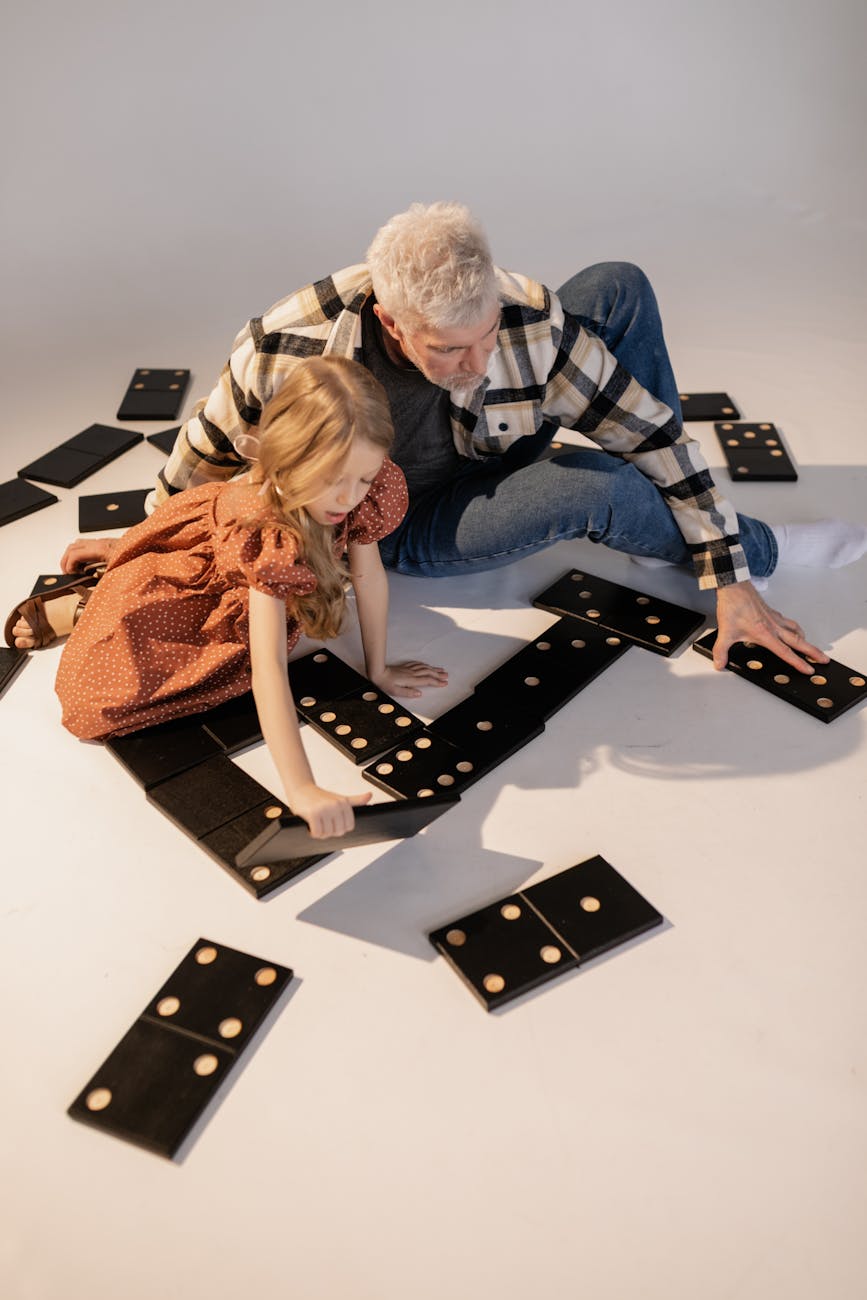
Symbols become a part of a family’s heritage. What role does the Bible play in your home? That becomes cultural to your family. So does the way Mom decorates for particular seasons of the year. The clothes we wear (and don’t wear) and when we wear them (or don’t), the family traditions we celebrate (and the ones we neglect or forget about), and even what we hang on our walls and refrigerator all work together to establish a family culture.
What does your dining room table symbolize? Is it the place where the stuff goes after school? What about the living room? Is it the place we use when we have visitors? Do we have to move the piles if we want a place to sit? Is it the place where we watch TV? Your answers describe what your home is like.
Does your family have any distinctly Christian traditions? Our family decided many years ago to make a big deal out of celebrating the Lord’s Day. We got the idea from someone else, and you might recognize some features of our celebration from a more prominent voice than mine. But we loved the idea and made it a tradition in our home. We wanted our kids to think of Sunday as the best day of the week, and we knew that the way to do this was to make it a special day.
Because Sunday is a busy day for me (with preaching in the mornings and evenings), we decided to make Saturday evenings the time for our weekly celebration. My wife makes it the best meal of the week; we set the table with a nice tablecloth, get out the nicest dishes, have a special drink and dessert, set chocolate out for everyone, and for several years, we tried out different craft cheeses. When the kids were little, I had a kind of catechism I went through with them that went something like this: “What day is today? The Lord’s Day! And why is it the Lord’s Day? Because He rose from the dead! And what kind of day is the Lord’s Day? A celebration!” Then we would sing, eat our chocolate, pray, and feast. Later, we would go for a walk, play a game, have a praise and thanksgiving time, and make it a fun evening, all centered around Christ.
Some of those things went away when the kids got older. But that tradition has anchored our family in the significance of the first day of the week as a day set aside to enjoy the Lord. We didn’t want our kids to dread Sunday, so we set out to establish a tradition that would fasten the day in their minds as a celebration day, a feast day.
Language is another powerful way we build up our homes and families in the culture of the Lord. The things we discuss around the table and in the living room fill the hearts of our children, or else (when healthy conversation is neglected or refused) leave them empty and craving the heart connection that only good conversation can build. The things we discuss form the culture of our homes, but so will the way we speak. The way we use anger and frustration shapes that culture. Mothers who speak sweetly when they are trying to manipulate impact their families. The language we use in our homes powerfully shapes the culture. When I listen to my children talk, I hear my voice and my wife’s.
Let me stress the importance of those commonplace worldview sayings you use frequently – the ones the kids will rehearse after you die (“Dad always said…”). These sayings communicate your values and establish them in your children’s hearts. When the kids are in trouble, what do you say? When you are correcting bad behavior, what standard do you appeal to? Is it always about you, about whether or not they made you happy or sad? Do you wait to correct them until they provoke you, or do you raise the standard of God’s Word before them and correct them when they violate that? Do you show them the Biblical standard they transgressed before you correct them, so they know that their behavior (whether disobedience to mom or malice towards a sibling) was a sin against God? This is the way language shapes culture.
Your values show up whenever you decide what the kids will do and what they won’t do. And your values affect the way you explain your decisions to your children. We must have a Biblical standard of behavior in our home, both for our children and ourselves. This standard must be communicated and consistently applied. When parents correct their children, they should remind them of the standard they violated. When we handle discipline this way, we communicate our values.
What kind of behavior is almost guaranteed to get the kids in trouble? If the greatest crime they could ever commit would be for them to embarrass you, then your children know your standard. A child was once asked what would get him in immediate trouble: if he broke a valuable vase or disobeyed his mother. The child did not hesitate: “If I broke the vase.” That mother communicated her values very clearly.

This one might surprise you: interruptions communicate values. What can be interrupted in your home, and what can’t be? What would it take to interrupt those things? What would get those things canceled? When are your kids allowed to interrupt you, and when would they choose to light their hair on fire and douse themselves in kerosene? What parts of your routine are off-limits and untouchable, and which would you be willing to set aside?
I don’t mean to encourage you to allow rudeness from your children, of course. They should know when they need to be listening and not talking. But, if I’m completely candid, I always wanted to include my kids in adult conversations. When I gave them the sign, I wanted them to be able to stop talking. But while the conversation continued, I wanted them to participate.
I can’t help but notice the ethos of Jesus, whose life communicated the Father’s demeanor to the world. Interruptions might be one of the most prominent features of His life. Once, while Jesus taught in a home, friends lowered a sick man into the room. Jesus didn’t respond peevishly to the interruption but addressed the problem. And once, mothers brought their children to Jesus. The disciples grew annoyed and were sure Jesus didn’t wish to be interrupted. But they were wrong. The interruptions you allow say what you value.
A Christian home also has a list of norms. Christian parents should place a high priority on regular family devotions. We always did ours at night, the last thing before bed. I had several reasons for choosing this time: mornings were busy, and there were many bodies to dress, feed, and hustle out the door. Mornings would have added to the burden. And I wanted the Word of God to be fresh on the kids’ minds as they went to sleep. I prayed with and for my children nightly, and they heard their names come out of my mouth in prayer every time we were together.
The dinner table should be a family gathering place. No matter how busy the day, my wife always ensured everyone was together when we ate dinner. We never allowed the kids to scrounge for themselves and hibernate with dinner in their bedrooms or apart from the family. Even if we only had 10-15 minutes together, we gave each of our kids a chance to tell us about their day.
Family times should be sacred – getting those canceled should take a lot. We gave each of our kids a night with Dad that was their own – a half hour (longer when they got older) to do whatever they wanted with Dad. No matter how much trouble they were in that day, I never withheld that time from them as a punishment. If their schedules didn’t allow them to have their night, we swapped or moved things around so they always got to have their night.
Establish the norms in your home. “House rules,” such as where coats and shoes go, whether or not the shoes come off in the house, standing for mom or the ladies at the table, help establish those norms. Everyone in the house should understand that God’s commandments are not optional. However, parents must ensure the family understands the difference between “God’s rules” and “house rules.” Teach your children a healthy respect for the “house rules,” which define the courtesies shown to the other family members. Godly parents require their children to show courtesy in the home. But the house rules might be waved at times. God’s rules will never be waved.
God commands us as parents to establish such a Christian home that the aroma of love permeates everything, that it comes out of the woodwork, that it is the glue that holds everything together – that and oatmeal with chocolate chips.
Hear, O Israel: The LORD our God is one LORD: And thou shalt love the LORD thy God with all thine heart, and with all thy soul, and with all thy might. And these words, which I command thee this day, shall be in thine heart: And thou shalt teach them diligently unto thy children, and shalt talk of them when thou sittest in thine house, and when thou walkest by the way, and when thou liest down, and when thou risest up. And thou shalt bind them for a sign upon thine hand, and they shall be as frontlets between thine eyes. And thou shalt write them upon the posts of thy house, and on thy gates. (Deuteronomy 6:4-9)
Be ye therefore followers of God, as dear children; And walk in love, as Christ also hath loved us, and hath given himself for us an offering and a sacrifice to God for a sweetsmelling savour. (Ephesians 6:1-2)
 The Village Smithy